The Ten-Month Problem With Every Deck in Northern Michigan
Northern Michigan gives a deck about ten good weeks a year by default, and every piece of an outdoor room exists to push past that.
September 21, 2026 · 3 min read
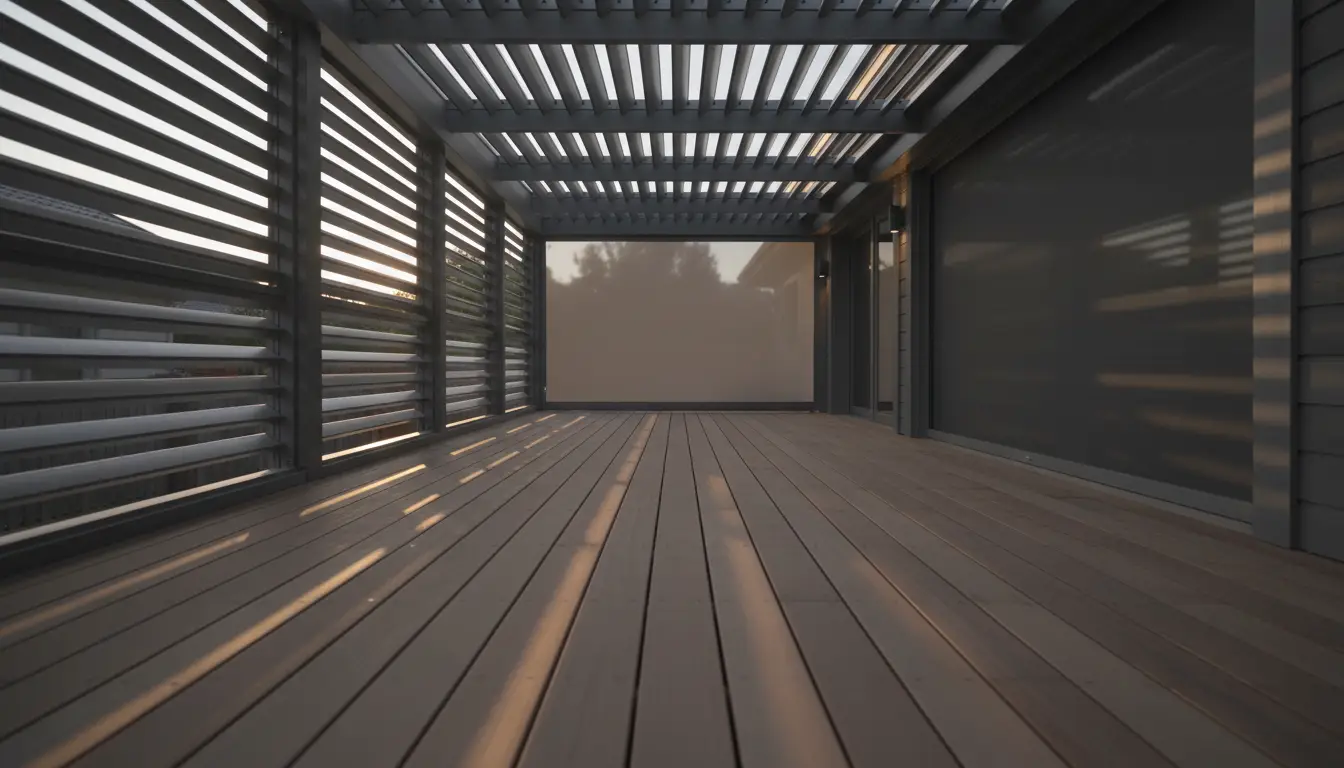
A deck gets built in May with real enthusiasm. By July it's the best part of the house. By late September it's a place to store the grill and not much else, and most of the yard furniture spends November through April under a tarp or in a shed somewhere. Northern Michigan doesn't get an unusually short summer by accident, and the reasons a deck goes quiet aren't mysterious once they're named one at a time.
The season is shorter than the calendar says
Officially, summer runs from June through September. In practice, the stretch where sitting outside doesn't require a plan or a jacket is closer to ten or twelve weeks. Grand Traverse County can throw a cold evening in early June and a frost warning before the leaves fully turn. The deck isn't unused because people don't like being outside. It's unused because the window where being outside is comfortable without any effort is short, and most decks are built for that narrow window and nothing else.
The usual first move, and why it stops working
The typical response is a market umbrella or a pop-up canopy, and for a season or two it helps. Then a windy afternoon folds it, or a sudden shower catches it mid-collapse, and it starts living in the garage more than over the table. An umbrella solves one problem, sun straight overhead at midday, and does nothing for wind, nothing for evening sun coming in sideways, and nothing at all once the sun goes down and the bugs come out. It's a patch, not an answer, and most households figure that out by the second or third summer.
Wind off the water changes what outside means here
Anyone near open water in this part of the state knows the wind doesn't announce itself the way rain does. A calm afternoon turns into napkins on the ground in the time it takes to bring out a second course. A roof overhead, on its own, doesn't fix that. It only fixes what falls from above. The sides of the space matter just as much as the top, and that's a different decision than the one most people make first.
The sun gets low and gets in the way
By August, the evening sun sits low enough to come in sideways under almost anything overhead, which is exactly when people want to be outside eating dinner. A roof pitched to block noon sun does nothing for six o'clock sun. This is one of the most common reasons an otherwise nice covered space still gets abandoned at the exact hour it should be busiest: the shade was aimed at the wrong problem.
Bugs end the evening before the cold does
Late July and August bring a run of evenings where the temperature is close to perfect and the bugs make it not worth it anyway. This variable has nothing to do with the roof and everything to do with what's around the sides of the space. People don't leave because it's uncomfortable. They leave because it's easier to go inside than to keep swatting at something for the rest of the night.
What actually answers each one
- Wind and low sun: something that closes off the sides of the space, not just the top
- Rain that turns without warning: a roof that can go from open to sealed in the time it takes to notice the sky changing
- Bugs at dusk: a mesh barrier that goes up when it's needed and disappears when it isn't
- The shoulder months on either side of summer: heat aimed at where people actually sit, not the whole yard
- A dark table on a July evening: light built into the structure itself, instead of a lamp run out from the kitchen
None of this is one product solving everything at once. It's a handful of decisions that either get made together, as part of one structure, or get made one at a time over several summers, usually after the deck has already sat empty for a season or two in between. Mammoth Outdoor Living has been building these systems into Northern Michigan backyards since it registered as a Michigan company in September 2021, working from the same starting point every time: figure out which of these problems is actually keeping a given yard quiet, then build toward that, not toward a generic idea of what an outdoor room should look like. A call to (231) 631-3476 is usually where that conversation starts, before anything gets specified.
Mammoth Outdoor Living, (231) 631-3476
Call (231) 631-3476More articles
Fixed Pergola, Solid Roof, or Louvered: What Each One Actually Gives You
There's no single right roof for a covered deck, only the one that matches how a specific yard actually gets used.
What to Work Out Before Anyone Quotes a Covered Deck
A more accurate quote starts with a homeowner answering a handful of questions no contractor can answer standing alone.