After dark
Lighting built into the frame, not bolted onto it
Warm fixtures set into the underside of the beams and wired inside the frame, so the deck reads as a real room once the sun goes down.
Chapter 01
Lighting a room that has no walls
Indoor lighting has walls and ceilings to bounce off, which forgives a lot of sloppy fixture placement. An outdoor room under a pergola has neither, so light either lands exactly where you aimed it or it goes straight up into the sky and does nothing for the people sitting underneath. That is the whole reason the fixtures on a job like this sit recessed into the underside of the beams, facing down, instead of mounted somewhere convenient and pointed sideways.
It changes how the space reads after dark. Done right, nobody notices the fixtures at all; they notice that the deck, the table, and the steps are lit, and the sky above the roofline is not competing for attention.
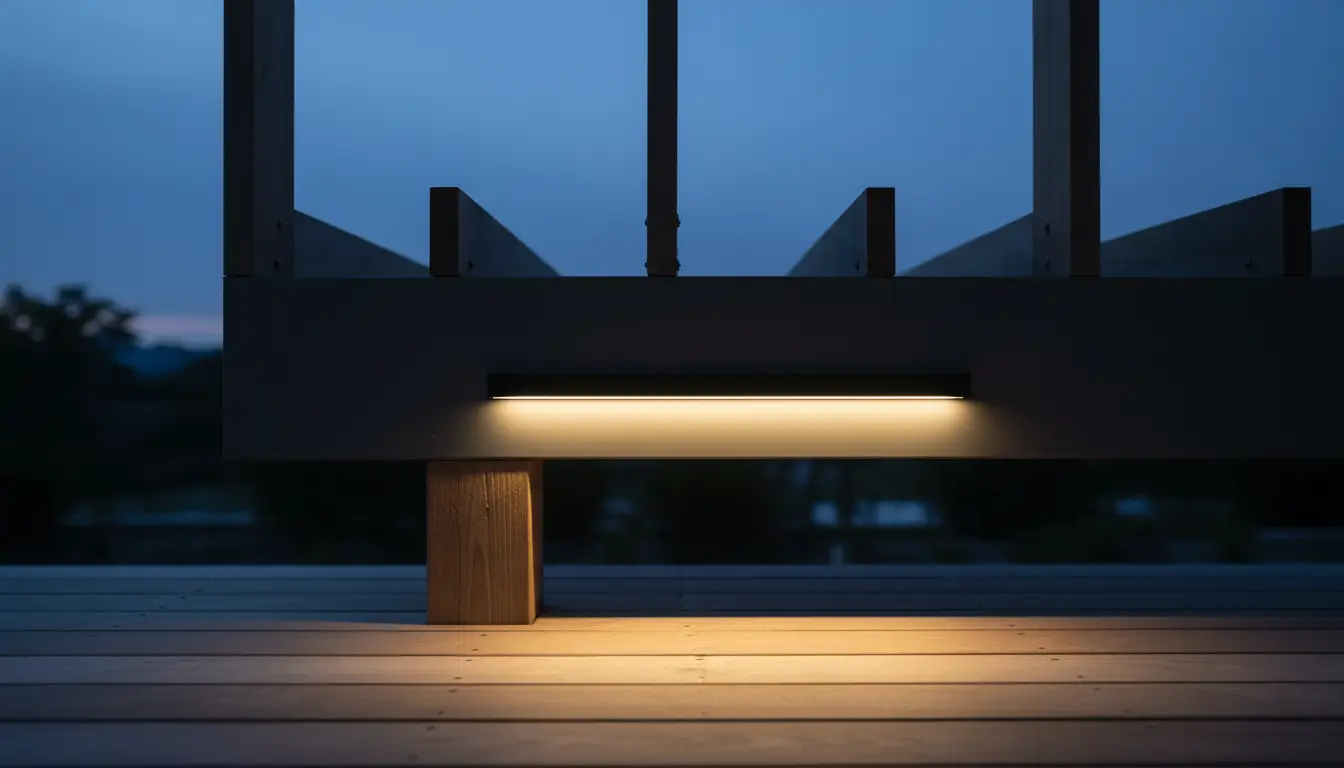
A slim warm linear light fixture recessed into the underside of a pergola beam at dusk, casting a soft wash down a cedar post and across the decking below
Wired into the frame, not onto it
The wiring for a lighting layout like this runs inside the beams, planned alongside the rest of the structure rather than added once the pergola is finished. That has to happen before the blade run goes on, because once the roof is closed up there is no clean path left to fish a wire through.
The visible result of doing it this way is the absence of anything visible: no conduit run along a post, no cable clipped to the underside of a rafter, nothing to catch your eye during the day when the lights are off. What you see at night is light; what you do not see, day or night, is how it got there.
Chapter 03
The failure modes
The most common mistake is a single bright fixture in the middle of the bay, which flattens the whole space into one harsh pool and puts a glare directly in the eye line of anyone sitting nearby. Color temperature is the second: a cool white bulb chosen for how it reads in a showroom turns cedar decking and posts a flat gray outside, instead of the warm tone the wood actually has.
The third is a switch placed by the back door and nothing where people actually sit, so adjusting the light means getting up and walking inside. None of these are hardware problems. They are layout decisions made without thinking through how the space actually gets used once the sun goes down.
Layers worth having
A layout worth having usually has more than one circuit doing different jobs. A warm down-wash along the beams handles the main seating area, something low and unobtrusive lights the steps or the deck edge for anyone walking through after dark, and a separate switch or dimmer lets the whole space go low without going dark entirely.
That last piece matters more than it sounds. A single bright setting works for dinner and fails for everything else: a quiet evening on the deck, a conversation that runs late, watching the light go out of the sky over Traverse City. Call Mammoth Outdoor Living at (231) 631-3476 and describe how you actually use the space; the lighting gets planned around that, not around a catalog default.
Mammoth Outdoor Living — Registered Michigan company since 2021. Call (231) 631-3476.